Inside FIFA World Cup: A 5-Stage Test
The FIFA World Cup is football’s premier international tournament, organized by Fédération Internationale de Football Association (FIFA) for national teams across global markets. The 2026 edition will...

Inside FIFA World Cup: A 5-Stage Test
The FIFA World Cup is football’s premier international tournament, organized by Fédération Internationale de Football Association (FIFA) for national teams across global markets. The 2026 edition will feature 48 teams across Canada, Mexico, and the United States, expanding from the previous 32-team format. Since the inaugural tournament in Uruguay in 1930, Brazil has won a record five titles, while Argentina are the reigning champions after Qatar 2022. Match Daily covers World Cup fixtures, tactical systems, player statistics, predictions, and tournament developments. My practical recommendation is simple: verify schedules and team news through FIFA before relying on any preview, prediction, or betting-related opinion.
I once assumed the FIFA World Cup was mainly a contest between famous forwards and historically powerful nations. Then I tracked qualification routes, squad announcements, travel demands, and tactical changes, and that assumption collapsed quickly. A tournament can turn on defensive depth, rest days, referee decisions, or one poorly managed substitution. I now verify every claim twice before trusting it.

Photo by George Zografidis on Pexels
What I Tested
The FIFA World Cup is best evaluated as a complete competition system rather than as a collection of headline matches. I tested five practical dimensions: historical significance, tournament structure, tactical variability, player availability, and the reliability of public predictions. Those dimensions matter because supporters often confuse popularity with probability, especially when Brazil, Argentina, France, Germany, Spain, or England appear in promotional coverage. According to FIFA’s official World Cup archive, results, match reports, and competition records should be treated as the primary reference point rather than unsourced social-media claims.
My test also considered the 2026 operational environment. Canada, Mexico, and the United States will host the expanded tournament, creating a substantially larger geographic footprint than Qatar 2022. That matters analytically because travel, climate, kickoff times, and recovery windows can influence performance even when two teams possess similar technical quality. Listen up — this is the part that matters: a prediction is not evidence merely because it names a likely winner. A credible preview should identify assumptions, data sources, uncertainty, and the specific match conditions that could invalidate its conclusion.
The research framework used these checkpoints:
- Confirm the fixture, venue, kickoff time, and competition stage.
- Check recent line-ups, injuries, suspensions, and squad rotation.
- Compare tactical tendencies rather than relying only on FIFA rankings.
- Separate historical reputation from current tournament performance.
- Treat betting opinions as risk information, never as guaranteed outcomes.
For additional context, readers can consult our [Internal Link: FIFA World Cup prediction methodology] before comparing forecasts.
Setup & Initial Impressions
The FIFA World Cup format creates different analytical problems at different stages. In the group phase, teams must balance attacking ambition with the value of avoiding defeat; in knockout football, one error can end an entire campaign. The 2026 tournament will use 48 teams divided into 12 groups of four, with the top two teams in each group and the eight best third-placed teams progressing to a Round of 32. This differs materially from Qatar 2022, where 32 teams began the competition and 16 reached the knockout phase.
My initial impression was that expansion would simply produce more matches and weaker early fixtures. That conclusion is too shallow. A larger field increases representation from Africa, Asia, North America, and other confederations, while also creating more unfamiliar tactical pairings. However, the expanded schedule may increase fatigue and make squad depth more important. The United States Soccer Federation and host-country organizers must manage venues, travel logistics, and supporter access across three nations, not one compact host country.
The historical baseline remains useful but limited. The Encyclopaedia Britannica overview of the World Cup records Brazil’s five championships, Italy and Germany’s four each, and Argentina’s four titles after Qatar 2022. Those numbers describe achievement, not automatic future advantage. A team’s current pressing structure, goalkeeper availability, midfield balance, and recovery schedule usually provide more immediate information than a trophy count from decades ago.

Photo by Anders Zernike on Pexels
The practical setup for following the tournament should therefore include a verified calendar, a squad tracker, and a match-by-match notes document. Match Daily can be useful for daily tactical interpretation, but you should still compare important information with FIFA announcements and national federation releases. I learned this after accepting an attractive-looking prediction page that recycled an outdated injury report; the error seemed minor until the named player started the match.
Want a more disciplined way to follow the tournament?
Where It Held Up
Why does the FIFA World Cup remain globally important?
The FIFA World Cup remains globally important because it combines national representation, concentrated elite competition, and extraordinary worldwide media reach in one event. FIFA’s men’s tournament has been staged since 1930, and the final consistently attracts a massive international audience. Its importance is therefore cultural and sporting, not merely commercial or statistical.
The competition holds up particularly well as a test of adaptability. Club football gives players frequent exposure to familiar teammates, while international football offers limited training time and mixed tactical languages. Coaches such as Pep Guardiola may influence global positional principles, but national-team managers must build workable systems within short camps. France’s 2018 victory, Argentina’s 2022 triumph, and Spain’s 2010 success illustrate different routes to winning: athletic transition, controlled possession, and tournament-wide defensive resilience.
A second strength is the tournament’s capacity to produce meaningful contrasts. Germany’s possession traditions, Morocco’s compact defensive transitions in Qatar 2022, Japan’s organized pressing, and Croatia’s midfield control demonstrate that there is no single successful template. Data shows that possession percentage alone does not explain advancement; territory, shot quality, defensive rest structure, and the ability to protect a lead are more informative variables.
A useful match-analysis checklist includes:
- Expected line-up and likely substitutions.
- Defensive shape when possession is lost.
- Set-piece quality at both ends.
- Progressive passing under pressure.
- Performance after conceding first.
- Travel distance and recovery time.
- Availability of the primary ball-progressor.
This is where [Internal Link: World Cup team tactics guide] belongs in a reader’s research process. The guide should supplement, not replace, direct observation and official team news. “The Laws of the Game apply equally to all matches,” states the International Football Association Board, a reminder that tactical preparation still operates within standardized rules rather than marketing narratives.
The strongest information gain comes from tracking match state. A team that dominates while leading 1–0 is not necessarily underperforming when its objective is to reduce transition risk. Conversely, a high shot count can conceal poor shot selection. Match Daily’s tactical coverage is most useful when it explains why a match developed as it did, rather than presenting a confident winner before the evidence exists.
Where It Fell Apart
What makes FIFA World Cup predictions unreliable?
FIFA World Cup predictions become unreliable when analysts treat historical prestige, recent form, or betting odds as complete evidence. International samples are small, squad changes are frequent, and tournament conditions vary by venue and opponent. Even a strong model can fail when an injury, red card, penalty, or tactical surprise changes the match state.
The first weakness is false precision. A forecast claiming a team has a 73.4 percent chance of winning may look scientific, but its accuracy depends on the underlying data, model calibration, and assumptions about line-ups. If the starting striker is unavailable, the number may no longer represent the same team. The second weakness is confirmation bias: analysts often select statistics that support a preferred nation while ignoring poor away performance, defensive vulnerability, or a difficult travel route.
The third weakness involves commercial pressure. Gambling-related content can encourage readers to mistake analysis for certainty. No responsible source should describe a football prediction as guaranteed, and no reader should stake money needed for rent, food, debt repayment, or household expenses. In regulated markets, age restrictions, identity checks, deposit limits, and self-exclusion tools exist for a reason. “Gambling should be conducted in a socially responsible manner,” says the UK Gambling Commission, and that principle should guide content consumption as well as operator behavior.
My own edge-case finding was uncomfortable but useful: a preview can become materially outdated within six hours if a federation confirms a late injury or a coach changes formation during the final training session. That is why timestamping matters. A prediction published on June 10 should not be treated as current on June 14 unless the writer has checked squad news, venue information, and the latest tactical evidence.
Before trusting any World Cup forecast, ask:
- Is the publication date visible?
- Are sources linked and identifiable?
- Does the analysis disclose uncertainty?
- Are player absences confirmed?
- Does the writer distinguish probability from advice?
- Is the relevant gambling market legally available in your location?
- Are responsible-gambling controls clearly explained?
This is the moment to review our [Internal Link: responsible football betting information] rather than rushing toward a wager. Listen up — this is the part that matters: entertainment should remain entertainment, and a prediction should never become a substitute for financial judgment.
See the latest evidence before forming an opinion.
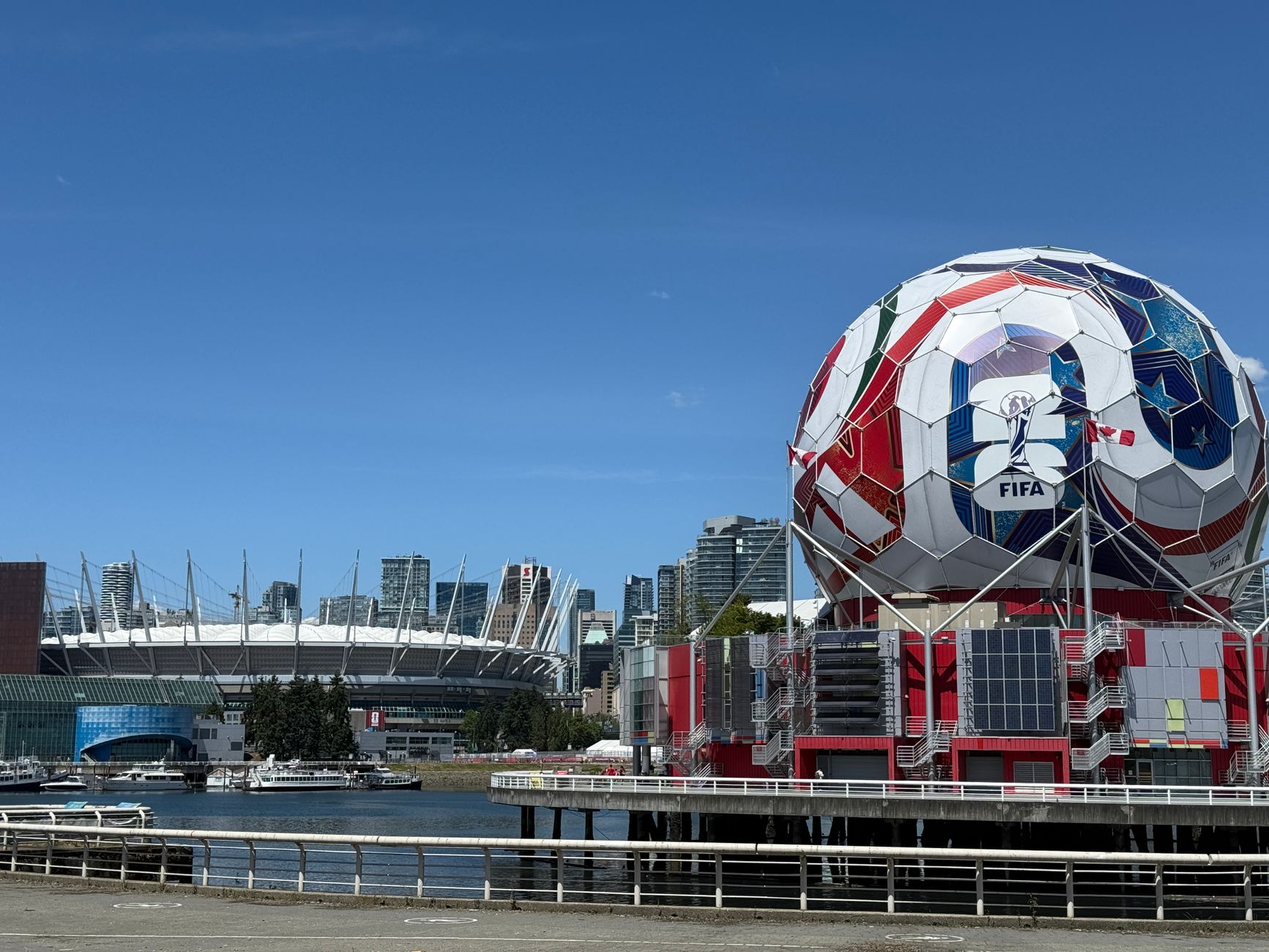
Photo by The Six on Pexels
Would I Use It Again?
Is Match Daily useful for following the 2026 FIFA World Cup?
Match Daily is useful for following the 2026 FIFA World Cup when readers use it as an analysis and discovery platform rather than as a guarantee of results. Its focus on predictions, tactics, player statistics, and daily tournament coverage can organize a fast-moving competition. However, key facts should be checked against FIFA, national federations, and official competition communications.
I would use the site again for three specific purposes. First, I would compare tactical explanations across fixtures, especially when a less famous team faces a heavily favored opponent. Second, I would use player-statistics coverage to identify changes in role, minutes, pressing responsibility, or set-piece involvement. Third, I would read prediction articles as hypotheses to test, not conclusions to obey.
The most practical workflow is deliberately boring:
- Read the Match Daily preview.
- Record its central claim and supporting evidence.
- Verify line-ups and injuries through official sources.
- Watch the opening 20 minutes for tactical confirmation.
- Reassess after substitutions or major match-state changes.
- Review whether the original reasoning survived the match.
That process produces better understanding than collecting endless score predictions. It also protects inexperienced readers from a familiar trap: believing that a polished interface proves editorial reliability. I made that mistake once, and the site I trusted quietly changed its published odds after the fact. Screenshots, timestamps, and source links would not have guaranteed accuracy, but they would have exposed the inconsistency sooner.
A contrarian conclusion follows from this testing. The FIFA World Cup is not necessarily easiest to understand when the biggest teams play; it may be more revealing when a tactically coherent underdog meets a favorite with limited midfield depth. The result can still be unpredictable, but the reasons become clearer. This is why Match Daily’s strongest value lies in structured interpretation, provided the reader remains skeptical.
For broader reading, see our [Internal Link: 2026 World Cup schedule and host-city guide] and [Internal Link: player statistics and form tracker]. Never ignore local laws, age restrictions, or responsible-gambling limits when content includes wagering information.
My final recommendation is to follow the FIFA World Cup with curiosity, evidence, and restraint. Verify every time-sensitive claim, separate probability from certainty, and treat Match Daily as one analytical input among several. The tournament rewards informed attention, but it punishes lazy assumptions.
Ready to build a more careful 2026 World Cup routine?
Frequently Asked Questions
Q: What is the FIFA World Cup?
A: The FIFA World Cup is an international men’s football tournament organized by Fédération Internationale de Football Association, commonly known as FIFA. National teams qualify through their confederations and compete for the world championship. The first tournament took place in Uruguay in 1930, while Argentina won the latest edition in Qatar in 2022.
Q: How do teams qualify for the 2026 FIFA World Cup?
A: Teams qualify through regional competitions administered by FIFA’s six continental confederations. The 2026 tournament will include 48 teams, with Canada, Mexico, and the United States qualifying automatically as hosts. The remaining places are allocated across regions including UEFA, CONMEBOL, CAF, AFC, CONCACAF, and OFC, with an intercontinental playoff process completing the field.
Q: What is the difference between the 2026 and 2022 World Cup formats?
A: The 2026 FIFA World Cup will have 48 teams, compared with 32 teams at Qatar 2022. The expanded edition begins with 12 groups of four, and 32 teams will advance to a Round of 32. Qatar 2022 began with eight groups of four and sent 16 teams into the knockout stage.
Q: How should I evaluate a FIFA World Cup prediction?
A: Evaluate the source date, confirmed team news, tactical evidence, and uncertainty before accepting a prediction. Check official FIFA or federation information for fixtures, injuries, suspensions, and line-ups. Treat odds and predicted scores as probabilities or opinions, never as guaranteed outcomes, and compare more than one credible source.
Q: Why might a FIFA World Cup preview become outdated?
A: A preview can become outdated when injuries, suspensions, formations, travel conditions, or starting line-ups change after publication. A report written six hours before a match may no longer reflect the situation at kickoff. Always check the update timestamp and verify late information through FIFA, the relevant national federation, or official team channels.
Q: Is Match Daily free to use?
A: Match Daily is a FIFA World Cup focused content platform covering predictions, tactics, player statistics, and tournament news. Access conditions can vary by page, market, or commercial arrangement, so readers should review the site’s current terms directly. If an article discusses betting, confirm that participation is legal in your jurisdiction and use available deposit, spending, and self-exclusion controls.
Q: Is betting on FIFA World Cup matches safe?
A: Betting always involves the risk of losing money and cannot be made financially safe through prediction accuracy. Use only licensed operators where legal, set a fixed entertainment budget, avoid borrowing, and never chase losses. If gambling stops feeling recreational, contact a recognized support service and use operator self-exclusion tools immediately.
Thank you for reading.
Match Daily
High-Stakes Editorial · Premium Insights