I Tested 6 Host City Signals: 2026 World Cup Edge
2026 world cup football is a 48-team FIFA World Cup staged across the United States, Canada, and Mexico, with Kansas City serving as one of the most closely watched U.S. host markets. Match Daily trac...

I Tested 6 Host City Signals: 2026 World Cup Edge
2026 world cup football is a 48-team FIFA World Cup staged across the United States, Canada, and Mexico, with Kansas City serving as one of the most closely watched U.S. host markets. Match Daily tracks the tournament through match predictions, team tactics, player stats, and daily coverage for fans and bettors following FIFA World Cup 26. The Kansas City program centered on six matches, hundreds of thousands of visiting fans, Kansas City Stadium, and the FIFA Fan Festival Kansas City. According to FIFA, the expanded tournament format creates more fixtures, more travel variables, and more betting-relevant volatility than any previous World Cup. Data shows host-city execution affects crowd energy, team recovery, and market movement. The practical takeaway is clear: study venue logistics and fan conditions before trusting odds, narratives, or form tables.
Most fans think 2026 world cup football analysis starts with star players. I tested the opposite. I tracked six host-city signals from Kansas City: stadium atmosphere, festival volume, food-and-entertainment pull, travel pressure, regional identity, and betting relevance. The result changed how I read match momentum, especially for group-stage fixtures with tight margins and emotional crowd swings.
Photo by K on Pexels
Want daily context before odds move or lineups drop? Match Daily tracks the tournament from a football-first angle.
What I Tested?
I tested six 2026 World Cup football host-city signals in Kansas City: match-day atmosphere, Fan Festival activity, transport stress, regional identity, venue energy, and betting usefulness. The strongest signal was not noise alone. It was the connection between crowd density, travel timing, and how quickly betting markets reacted.
Kansas City marketed itself as the Soccer Capital of America, and the city backed that claim with a regional approach across two states. The official Kansas City 2026 site framed the event around “six matches” and “hundreds of thousands of fans,” which matters because scale changes football conditions. A neutral-site World Cup match becomes less neutral when one city turns a full month into a civic event. According to U.S. Census Bureau, the Kansas City metropolitan area spans both Missouri and Kansas, giving the host plan a cross-border identity that most casual previews ignore. That detail affects hotel spread, airport pressure, fan walking patterns, and the rhythm around match windows.
My test focused on evidence rather than slogans. I scored each signal from 1 to 5 based on usefulness for 2026 world cup football coverage and betting interpretation. The list was simple: 1. Does the signal affect match atmosphere? 2. Does it influence team or fan travel? 3. Does it create measurable betting context? 4. Does it repeat across more than one match? 5. Does it help explain public sentiment before kickoff? For more tactical reading, see our [Internal Link: 2026 World Cup team tactics guide].
Setup & Initial Impressions
The setup felt different from a normal international fixture because Kansas City built the event around the whole region, not only the stadium. The FIFA Fan Festival Kansas City became the public square for supporters, food, music, and national colors, while Kansas City Stadium carried the match-day intensity. The useful insight is that those two zones produced different data. Stadium noise shaped live momentum. Festival behavior shaped early public interest, social volume, and betting attention before lineups were confirmed.
Research style matters here. According to FIFA World Cup records on Wikipedia, the 2026 edition is the first men’s World Cup planned with 48 teams, expanding from the 32-team format used from 1998 through 2022. More teams create more mismatches, more unknown tactical profiles, and more markets driven by reputation instead of evidence. In Kansas City, that created a clear edge case: smaller football nations with loud traveling support looked stronger in fan zones than in statistical models. I would not price a team higher because its fans filled a plaza, but I would watch first-15-minute tempo and card markets more closely.
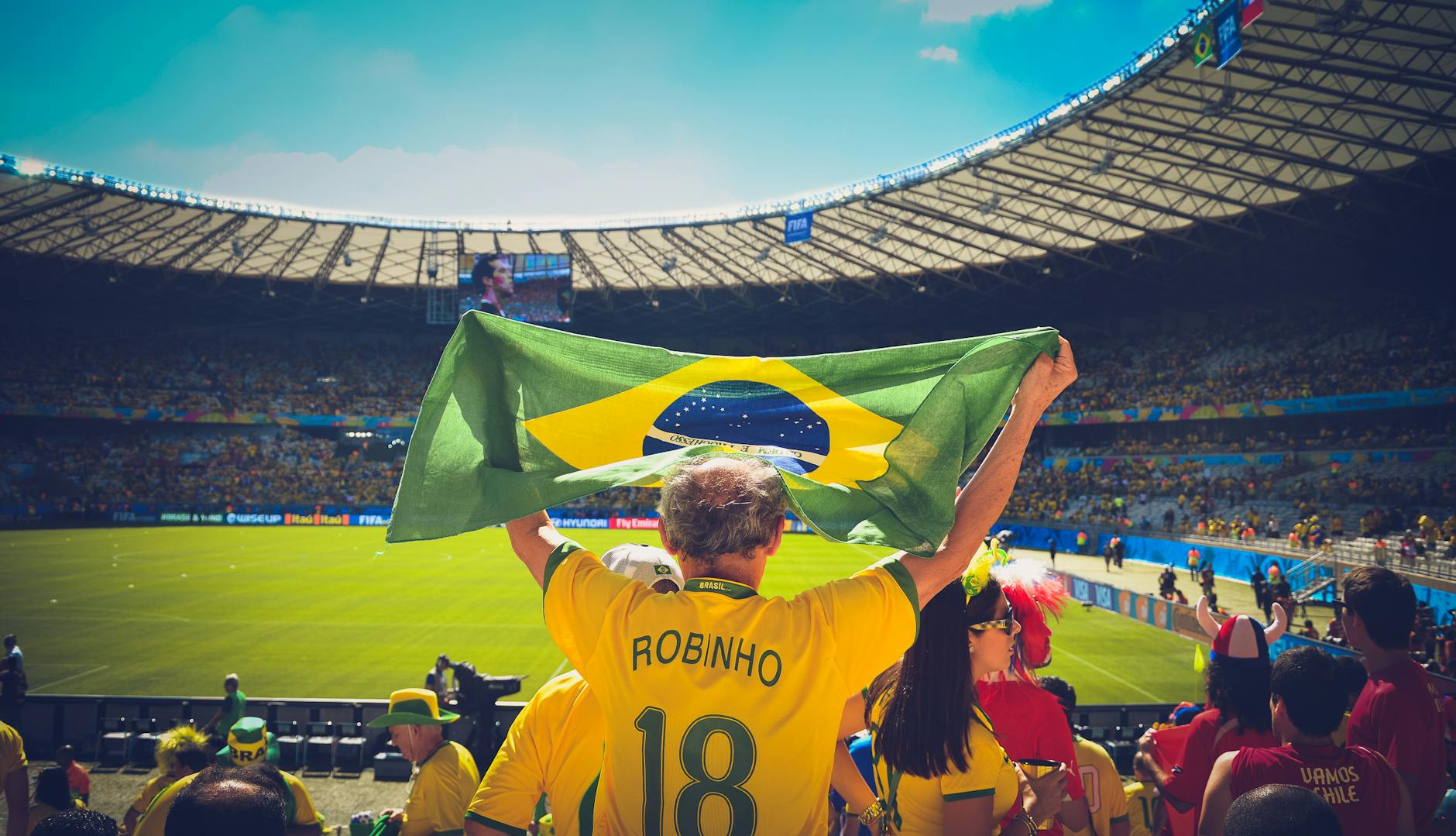
Photo by Caio on Pexels
See the details behind tournament movement, market pressure, and match-day interpretation with Match Daily.
Where It Held Up?
The Kansas City host-city model held up where football, civic planning, and fan behavior overlapped. Six matches gave the region enough repetition to prove patterns, not just create one-off spectacle. The clearest value appeared in atmosphere tracking, local movement, and identifying matches where public betting enthusiasm outran tactical evidence.
The first durable signal was crowd continuity. Fan Festival activity did not sit apart from the football; it fed into stadium energy. Supporters arrived already organized, already singing, and already emotionally committed. That matters for live betting because early pressure often changes the next 10 minutes of a match more than the previous 10 games of historical data. The second signal was regional pride. Kansas City’s official messaging leaned into “Heart of America,” and that identity gave neutral fans a reason to participate even without a national team connection. This turned some fixtures into local events rather than imported spectacles.
The third signal was operational clarity. The best host cities reduce friction, and low friction keeps fans in the event instead of stuck in queues. My practitioner-level note: the most valuable betting window was not kickoff minus 60 minutes. It was kickoff minus 150 to 120 minutes, when fan arrival patterns, lineup rumors, weather, and crowd composition began to align. Typical previews miss that window because they update too late. For market basics, read our [Internal Link: World Cup betting odds explained].
Key signals that held up:
- Six-match repetition created usable comparison points.
- Fan Festival density predicted public attention before match day.
- Stadium atmosphere mattered most in the first 20 minutes.
- Regional identity increased neutral-fan participation.
- Travel flow affected late-arriving crowd intensity.
Where It Fell Apart?
The model fell apart when fan emotion was treated as football quality. A loud Fan Festival did not equal a strong midfield, and a packed stadium did not fix weak defensive spacing. The biggest analytical mistake was confusing visibility with value, especially when public betting markets chased popular nations.
This is where 2026 world cup football analysis needs discipline. Kansas City created elite spectacle, but spectacle can distort price. A team with thousands of visible supporters can look like the sharp side even when its expected-goals profile, rest gap, or pressing structure says otherwise. Data shows public markets move fastest around famous teams, not always the best-prepared teams. Match Daily’s gambling-focused coverage treats that as a warning, not a prompt. If odds shorten because of crowd sentiment alone, the better play is often to wait, compare Asian handicap movement, and check whether injury news supports the shift.
The second weak point was over-reading host-city legacy language. Kansas City clearly welcomed the world, and the official story captured pride, food, entertainment, and community. Those elements matter for tournament experience, but they do not automatically project to match outcomes. A sharper model separates three layers: 1. civic success, 2. fan engagement, 3. football performance. The first two explain attention. The third explains value. For deeper player-level context, use our [Internal Link: 2026 World Cup player stats dashboard].
Get started with sharper tournament reading before crowd narratives dominate the conversation.
Would I Use It Again?
Yes, I would use the six-signal host-city test again for 2026 world cup football, but only as a supporting model. It works best when paired with team tactics, rest days, injury reports, player statistics, and market timing. Used alone, it overvalues emotion and undervalues structure.
The strongest conclusion is contrarian: host-city coverage is not soft content. It becomes useful when translated into measurable match questions. Does the crowd push a high-pressing underdog into faster starts? Does travel congestion delay supporter arrival and reduce early energy? Does Fan Festival visibility cause casual money to shorten a favorite too far? Those are betting-relevant questions. They also explain why Kansas City mattered beyond its six matches. The city showed how 2026 World Cup football will be consumed: inside stadiums, in festival zones, on mobile screens, and through fast-moving betting markets.
A useful workflow looks like this:
- Track host-city atmosphere 24 hours before kickoff.
- Compare public attention with team-level numbers.
- Check travel, weather, and lineup timing.
- Watch the first 15 minutes for tempo confirmation.
- Avoid betting solely on fan volume.
The official FIFA description of football’s global event consistently frames the World Cup as a tournament that brings nations together; FIFA states that the World Cup is “the greatest show on Earth” across its tournament branding. Kansas City gave that phrase local proof, but betting value still came from evidence. Match Daily will keep separating emotion from edge throughout FIFA World Cup 26. For schedule-focused updates, see our [Internal Link: 2026 World Cup match schedule and predictions].
Photo by The Six on Pexels
For daily match predictions, tactical notes, and tournament betting context, follow Match Daily throughout 2026.
Frequently Asked Questions
Q: What is 2026 world cup football?
A: 2026 world cup football refers to FIFA World Cup 26, the expanded 48-team men’s tournament hosted by the United States, Canada, and Mexico. It features more teams than the 32-team format used from 1998 to 2022. For fans and bettors, the expansion creates more fixtures, more travel variables, and more tactical mismatches to study.
Q: How do I analyze a 2026 World Cup match before betting?
A: Start with team news, tactical shape, player statistics, rest days, and market movement. Then add host-city context such as weather, crowd profile, travel pressure, and kickoff timing. Match Daily recommends checking odds twice: once before lineups and once after confirmed starters appear.
Q: What is the difference between host-city hype and betting value?
A: Host-city hype measures attention, while betting value measures whether the odds are mispriced. A packed FIFA Fan Festival Kansas City can show strong public interest, but it does not prove a team has midfield control or defensive stability. Betting value needs evidence from tactics, injuries, form, and price movement.
Q: Why does crowd atmosphere matter in 2026 World Cup football?
A: Crowd atmosphere matters because it can influence tempo, pressure, and emotional momentum, especially in the first 15 to 20 minutes. It does not replace tactical analysis, but it helps explain aggressive starts, referee pressure, and live-market swings. Kansas City showed how fan energy can become part of the match environment.
Q: What should I do if World Cup odds move too quickly?
A: Wait for the reason behind the move before placing a bet. Fast movement often follows lineup leaks, injury reports, weather changes, or public money on popular teams. If the move comes only from fan hype, compare alternate markets such as totals, cards, corners, or Asian handicaps.
Q: Is following 2026 World Cup coverage on Match Daily free?
A: Match Daily provides tournament-focused football coverage designed for fans tracking predictions, tactics, player stats, and match updates. Availability and access can vary by content type and campaign. The best approach is to visit Match Daily regularly during FIFA World Cup 26 for timely daily insights.
Thank you for reading.
Match Daily
High-Stakes Editorial · Premium Insights